 Driving home from work yesterday while listening to my favorite show on the radio, NPR’s All Things Considered, I chanced upon a couple of interesting clips that explore the very common use of the word “Natural” in food packages and nutrition labels.
In the segment Meat Firms Give USDA an Earful on ‘Natural’ Label, Allison Aubrey mentions that:
The U.S. Department of Agriculture is considering a new definition of “natural foods,” at least when it comes to meat and poultry. At a public meeting, the agency heard from critics who say that for meat labels, a “natural” claim should only be allowed when meats don’t contain any additives or preservatives.
This is certainly good news for sticklers of natural food products who do not want any kind of preservatives in their meats. For example:
One common technique used by chicken processors is to inject the meat with saline solution. The additive itself is natural. But is it natural to pump it into chicken? Manufacturers like the Sanderson Farms Company, based in Laurel, Miss., and Hormel, makers of the Natural Choice line of deli meats, say it isn’t. And they want their products to stand apart from meats treated with salt or other materials.
When saline solution is injected into the meat, it tends to tenderize and flavor the meat, but also disturbs those who worry about misleading consumers. And thnk about this too: the salt water increases the weight of the chicken (which is usually sold by the pound) and so there’s the other concern that consumers are now paying partially for the weight of the injected salt-water while the label on the package continues to tout “All Natural”!
Some of this is human psychology. Agriculture Department officials noted Tuesday, for instance, that they need better information about what consumers think terms like “natural,” “minimal processing” and “artificial and synthetic” mean. This could shape what practices officials allow for each term.
Federal officials have convened a Dec. 12 public hearing at Agriculture Department headquarters in Washington. That four-hour hearing will just be the appetizer. Next, the Agriculture Department will start formally rewriting the rules.
-Via The Mercury News
 Then there’s the non-meat side of the story. Think about the plethora of common household products like jams, cereal bars and sauces. Do they qualify as natural? NPR talks about that too.
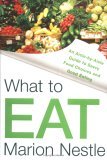
The segment Looking Behind the ‘Natural’ Label on Foods is another thought-provoking discussion between Noah Adams and nutritionist Marion Nestle about what it really means when foods are labeled “natural.” Nestle is the Paulette Goddard Professor of Nutrition, Food Studies, and Public Health at New York University and author of a recent book What to Eat.
To find out for myself, I decided to see for myself what ingredients were used in a leading product that is labeled as being natural.
Nature Valley is one of the largest manufacturers of ready-to-eat bars including trail-mix and granola bars.
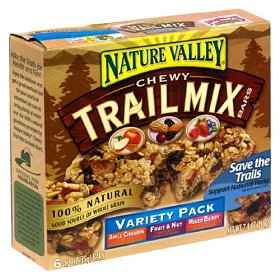
Their Chewy Trail Mix product line consists of popular ready-to-eat bars that proudly bear the following sign on their packaging: “100% Natural, Good Source of Whole Grain”. That alone would be enough to convince most consumers that the bar is an excellent addition to their pantry.
But let’s take a good look at the ingredient list:
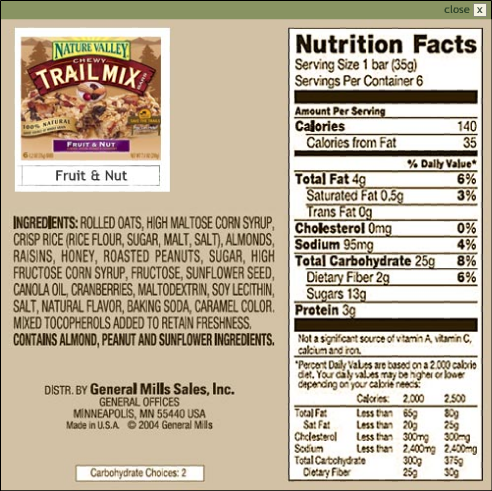
Two suspects pop right out fo the list: High Maltose Corn Syrup and our arch-nemesis High Fructose Corn Syrup. You already know that High Fructose Corn Syrup (HFCS) is made in industrial vats by running multiple genetically-modified enzymes over (almost always) genetically modified corn-starch, unnaturally extracting glucose and then increasing its fructose content to about 55%. High Maltose Corn Syrup is not too innocent either - it is just a distant cousin of HFCS except it has a higher maltose (rather than fructose) content and is not as sweet. It is still a corn-based, enzymatically produced, unnatural product.
Now enzymes are in use everyday in our body starting from the mouth and all the way down to our intestines - that is how we process food. But should enzymes be used to convert a naturally occuring whole-grain like corn into glucose (and then increasing either its fructose or maltose content) before we ever get a chance to consume it? Can it still be considered “natural” after all this processing? These are important questions the FDA should address so consumers are aware of what constitutes a natural product.
In contrast consider truly natural products like regular oatmeal or natural sweeteners like honey or pure maple syrup. These are almost “directly from nature” products and the only “processing” they undergo is literally chopping the product down to size (in the case of oatmeal) or pouring into convenient jars (for honey/mape syrup) for easy consumption.
The next time you walk into a grocery store and see the words “Natural” on a product, a simple quick peek at the ingredient list will reveal the truth to you. As a discerning consumer you owe this to yourself.
Technorati Tags: health, nutrition, food labels, natural, high fructose corn syrup
