Salt, how do we hate thee, let me count the ways! Sometimes the public is so quick to get on the nutrition bandwagon and demonize a perceived common enemy, that common sense and due diligence are often shown the door (case in point: our fear of saturated fat, cholesterol, … I could go on, but those are rants for some other day). Today we shall talk about salt. Yes, that very same white powder which was once apparently given to the Gods as an offering, without which food is often tasteless, heck, without which we could not even survive.
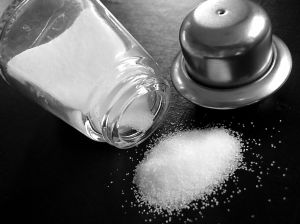 Today it is not far from the truth if I say salt is close to being public enemy #1. With the sodium content prominently displayed on all food-nutrition labels, salt is the bane of many a food-processor who just wants to preserve the food until it gets to you and wants to add some flavor while at it. Before you think I am all for excessive salt consumption, let me make it clear that anything in excess is bound to create an imbalance in our bodies that will then have to be taken care of, a process that uses up valuable resources and could lead to other complications. But to vilify one particular ingredient to the extent it is being done these days is overkill and probably incorrect as well.
“The neverending war on the white stuff” posted on Spiked-Online discusses the campaign against salt waged by the UK Food Standards Agency (FSA). By 2012, the FSA would like to bring the salt consumption of UK residents down to just 6g a day. Almost 80 categories of foods like bread and cereals have been affected by this new mandate.
As can be expected, the food manufacturers are up in arms over these new rules. Yes, the primary concern is that the foods being packaged with less salt will have a lot less appeal to consumers. But there is something else: the relationship between salt consumption and our health is not even conclusive! From Spiked:
When it comes to actual research on the effects of salt reduction, the results are inconsistent and any benefits are generally very small. A review in the British Medical Journal in 2002 concluded: ‘Intensive interventions, unsuited to primary care or population prevention programmes, provide only small reductions in blood pressure and sodium excretion, and effects on deaths and cardiovascular events are unclear. Advice to reduce sodium intake may help people on antihypertensive drugs to stop their medication while maintaining good blood pressure control.’ In other words, if you’ve already got high blood pressure, salt reduction might help, but for everyone else it is probably pointless. [Spiked]
And irrespective of what excessive salt could or could not do to our bodies, regular consumption of salt is not only OK, it is actually vital to our very survival. Our bodies are certainly capable or handling any little extra quantities of salt we might unknowingly consume (no one I know would consume spoonfuls of salt - our mouths pretty much makes sure we eat things in the right quantities and proportions). There is even a theory that our mouths react to salt in a favorable way because from an evolutionary point of view it was known to be good for health.
As the article concludes, while politicians try to “save us from ourselves” by giving us one mandate after another and invading our privacy with faulty research, it’s up to us to read more, get educated and not give into the hype.
[Via Lew Rockwell]

{ 2 comments… read them below or add one }
Wow, not a single comment dissenting with this defense of food manufacturers’ excessive use of salt in their products? Guess no one is reading this blog. I used to like it, but I think it’s been taken over by aliens who have been bribed by Conagra to encourage humans to eat their products and kill us all off while making food industrialists rich.
I’ve never seriously cut back on salt intake. I focus more on reducing the quickie-type meals. I strongly believe in exactly what the post said - the important thing is to eat fresh, healthy, unprocessed foods. Then, not only are you controlling your salt intake, but you are more nutrients and fiber. Thanks for the nice blog which make other people know about how good or bad is to intake salt.