 Welcome to “FitnessMantra Weekend”, your once-a-week health news update. As always you can also stay updated with the latest in fitness news by subscribing separately to the Fitness Mantra del.icio.us feed.
Fitness-wise it was a quieter week than usual over the news wires, but that does not reduce the importance of certain stories, especially the BBC feature that talks about how a Fat scan shows up ‘true’ obesity. It talks about a new indicator called Body Volume Index(BVI) that is now being measured in human beings and it goes back to the old Body Mass Index vs Body Fat Percentage as a means to determine if a person is obese or not. (You can read more about what each indicator means in one of my previous posts). This BBC article describes it best when it says:
Currently, doctors gauge fatness with a calculation of body mass index (BMI). But BMI is flawed - people with lots of muscle are considered overweight. Instead of relying on weight and height measurements, as BMI does, the [newly developed 3d] scan takes into account body shape and how much fat a person carries.
I have previously mentioned my similar disillusionment with using Body Mass Index which I feel is an inaccurate indicator of whether a person is obese and this belief is only further vindicated when I read such stories:
One human guinea pig who has tested the BVI scanner is 19-year-old rower Ashley Granger. He is 6ft 2ins (1.88m) tall and according to his BMI of 28 is at the top end of the overweight category, borderline obese.
His BVI scan correctly showed that he carries very little fat and that his weight is largely due to muscle. Fitness trainer Matt Roberts said: “Muscle weighs more than fat does. And you can hide away fat but be quite thin looking.
“So it’s important that we don’t just use BMI alone.”
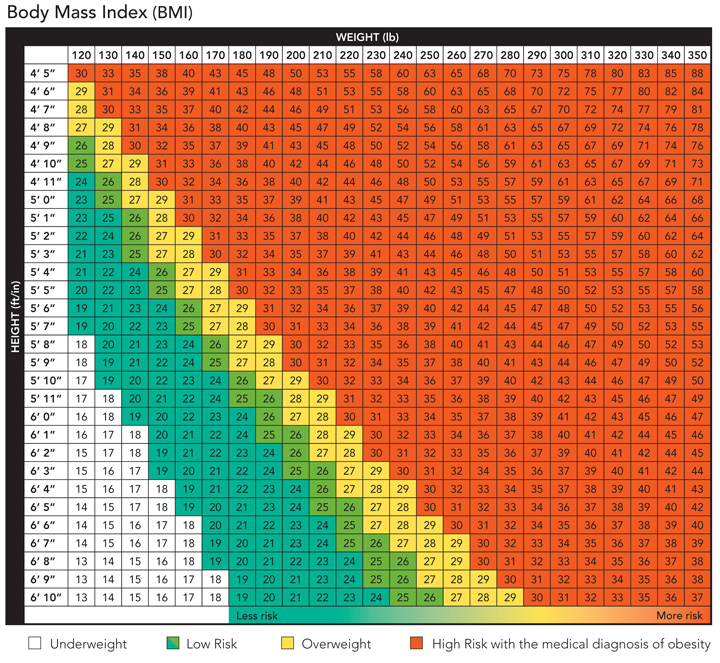
Click To Enlarge (Image Source: Obesity Treatment Center)
So, while it’s still a quick and easy overweight-indicator for most average adults, Body Mass Index should not be used as the only indicator especially if you perform strength training regularly and have a strong reason to believe that a lot fo your weight could be from muscle rather than fat.
Health and fitness stories for this week follow:
- Slimming for summer? Beware March madness: Swimsuit season is now closer than you think. That’s why March, not January, is the peak month for dieting, according to surveys.
- Fortified foods: Too much of a good thing?: You’re in the grocery store shopping for a carton of orange juice for tomorrow’s breakfast and you’re faced with a decision: plain old juice or, for no extra cost, one fortified with bone-building calcium.
- Fat scan shows up ‘true’ obesity: “Muscle weighs more than fat does. And you can hide away fat but be quite thin looking. “So it’s important that we don’t just use BMI alone.”
- Exercise May Ease Menopause Symptoms: Menopausal women who exercise regularly appear to have a better quality of life than women who don’t, a new study shows.
- Plant foods cut breast cancer risk: Postmenopausal women who eat healthy amounts of plant foods rich in estrogen-like compounds called lignans may reduce their risk of developing breast cancer, according to a new study.
- Eating fruit may prevent colon cancer: People who eat a diet high in fruit and low in meat reduce their risk of developing colon cancer, researchers reported on Wednesday.
- Chinese restaurant food unhealthy: The typical Chinese restaurant menu is a sea of nutritional no-nos, a consumer group has found.
- High fat diet may up breast cancer risk: A large study of middle-age women with a wide range of fat in their diet shows that eating a high-fat diet raises the risk of developing invasive breast cancer.
- Blood sugar ‘boosts cancer risk’: Women with high blood sugar levels are at an increased risk of developing cancer, a major European study finds.
- Acids in Popular Sodas Erode Tooth Enamel: Root beer could be the safest soft drink for your teeth, new research suggests, but many other popular diet and sugared sodas are nearly as corrosive to dental enamel as battery acid.
- Inactivity ‘costs NHS £1 billion’: Couch potato lifestyles cost the health service more than £1 billion a year, research suggests.
- Produce Campaign Aims to Produce Better Health: Get ready for the juggler. That’s the icon that you’ll soon see on fruit, vegetables and the healthy products that contain them.
- Secret to slim kids: 15 minutes of activity: Just 15 minutes a day of kicking around a ball or swimming might be enough to keep children from becoming obese, British and U.S. researchers said on Monday.
- Warning over hidden salt in foods: People are making progress on cutting their salt intake but too many still forget to check for hidden salt in foods, campaigners warn.
- States pushing online fitness programs: With obesity worsening across the nation, a growing number of states like Indiana are launching online initiatives to combat residents’ expanding waistlines.
Get the best health and fitness stories of the week in your RSS inbox.
Have a great weekend!
[tags]health, fitness, health news, fitness news, health links, fitness links, del.icio.us, body mass index, body fat percentage, body volume index, bmi, bvi [/tags]
{ 2 comments… read them below or add one }
Yes i agree! BMI can be a useful measure, however ought to be used with caution and wit! We need to take into consideration other factors, for example waist circumference.
When you are trying to lose body fat, the best way to do it is still by proper dieting and exercise. Avoid taking slimming pills at all cost, they do more harm than good.