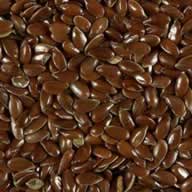
 When you first take a look at the unassuming flaxseed it would not be surprising if you underestimated its potential value.
Dull-brown and most ordinary-looking, flaxseeds don’t have the charisma of a walnut or cashew, but grind it or extract its oil and that’s when its true colors literally show up.
One of the most fiber-rich sources known to man, flaxseed meal and oil have excellent calorific payload and are also extremely easy to include in our diets. The meal has a nutty texture to it and makes for great toppings, while the oil is an excellent soure of good unsaturated fat.
But enough of introductions - it’s time to get to the flax, er, facts. The following information is taken from the Bob’s Red Mill website, but you can use any brand of pure flaxseed meal:

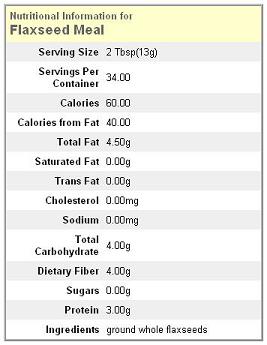
Main Ingredients in a serving of Flaxseed Meal and their Health Benefits:
- 4g of fiber (infact all carbohydrates in flaxseed come in the form of fiber!). This breaks up as 1.33 grams of Soluble Fiber and 2.67 grams of Insoluble Fiber. As I previously mentioned in my Oatmeal post, soluble fibers combine with fatty acids to form a kind of gel in your intestine releasing energy slowly from food making you feel full longer and also helps in lowering total and bad cholesterol. Insoluble fiber, on the other hand helps in moving food through the intestine and promotes regularity, while also maintaining a steady pH (acidity) in the intestines.
- 2400 mg of Omega 3 Fatty Acids in the form of alpha linolenic acid (ALA). Omega-3s are essential fatty acids that have been shown to increase your good cholesterol (HDL) and decrease your bad cholesterol (LDL) and total cholesterol levels. Omega-3 fats help in preventing erratic heart rhythms and also makes your blood less likely to clot in arteries (a leading cause of heart-attacks). whfoods.org maintains detailed information about the benefits of Omega-3 fats, while Omega-3Info talks about the Role Essential Fatty Acids Play In Our Body.
- 3g of protein: Essential building blocks of muscle.
- Good quantity of lignans: Lignans are a class of phyto-estrogens which are anti-oxidants, and while many believe that the effects of anti-oxidants are sometimes over-rated, World’s Healthiest Foods reports that lignans have been shown to lessen a woman’s risk of developing cancer and can promote normal ovulation and extend the second, progesterone-dominant half of the cycle. It has also been shown to decrease insulin resistance, which, in turn, reduces bio-available estrogen, which also lessens breast cancer risk. And, as insulin resistance is an early warning sign for type 2 diabetes, flaxseed may also provide protection against this disease.
Easy ways to include flaxseed in our diets:
Since flaxseed meal has a nutty texture, it is quite easy to include in our daily diets. Here are some suggested ways:
- Topped on yogurt or cottage cheese.
- Sprinkled on salads or steamed vegetables.
- Mixed with oatmeal and other cereals for that extra crunch!
- Added to homemade muffin, cookie or bread recipes.
- 2 tablespoons stirred with a glass of water.
- Want more? Check out these delicious-sounding recipes!
Storing and using flaxseed meal:
- Store in opaque packaging to protect nutrients against light.
- Once opened keep refrigerated or frozen.
- Do not cook as this might also destroy its nutrients.
Finally, a little bit of trivia:
What’s in a name? Well, when it comes to the scientific name of flaxseeds, the name says it all. Flaxseeds are known as Linum usitatissimum with its species name meaning “most useful”. That would definitely describe the versatility and nutritional value of this tiny little seed.
-Via World’s Healthiest Foods
So, how do you plan to include more of this natural wonder-food in your diet?
Technorati Tags: nutrition, flax, flaxseed, flaxseed meal, flaxseed oil
Related Posts:
 A while back when I wrote about the cost and benefit of eating healthful foods I began by saying “Eating fresh healthful food is always going to be more expensive than the mass produced, refined, processed, packaged foods.” and that is still the case for a majority of the Fitman Foods discussed on this site like almonds, walnuts or cottage cheese (especially when used as part of a daily diet).