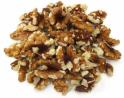
If the almond is the most nutritious of nuts out there, the walnut is a close second. Walnuts have one of the highest percentages of omega-3 fatty acids, which control triglyceride levels and also reduce bad cholesterol levels. Just one ounce of walnuts contains 2.5g of omega-3 fatty acids compared to less than 0.5g in other nuts.
Nutrition:
One ounce of walnuts (about 14 halves) consists of the following:
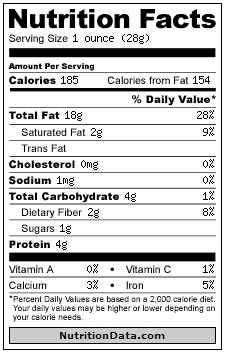
When you compare this with the nutrition information of almonds, you would first see that for the amount of fat, walnuts do indeed have less protein and fiber than almonds. But walnuts contain something that almonds have almost none of: yes, those omega-3 fatty acids.
Benefits of eating walnuts:
Walnuts are extremely nutrition-dense in nature and come packed with these benefits:
- 2.5g of omega-3 fatty acids in each serving. Omega-3s are essential fatty acids that have been shown to increase your good cholesterol (HDL) and decrease your bad cholesterol (LDL) and total cholesterol levels. Omega-3 fats help in preventing erratic heart rhythms and also makes your blood less likely to clot in arteries (a leading cause of heart-attacks). whfoods.org maintains detailed information about the benefits of Omega-3 fats, while Omega-3Info talks about the Role Essential Fatty Acids Play In Our Body.
- 4g of protein and 2g of fiber: These are good for maintaining muscle mass and also add to the fullness factor in foods.
- Good natural source of bio-available melatonin: The hormone melatonin is secreted by the pineal gland is involved in sleep regulation. But it has also been shown to possess excess anti-oxiant properties. One serving of walnuts contains about 70 nanograms of melatonin. According to Russel J. Reiter, Ph.D., Professor of Neuroendocrinology at The University of Texas Health Science Center at San Antonio, “Melatonin and omega-3s, both of which are in walnuts, starve cancers because they prevent the growth of cancer cells. When you take melatonin as a tablet, you are exclusively getting melatonin. I think the value of the walnut is the composite of what it contains.”
- ellagic acid is another anti-oxidant found in walnuts that has anti-cancer properties. It prevents the formation of free-radicals and also prevents cancer-cells from replicating.
FDA endorsement:
In March of 2004, the Food and Drug Administration of U.S.A. announced that a Qualified Health Claim can appear on packaged walnuts stating that: “Supportive but not conclusive research shows that eating 1.5 oz of walnuts per day, as part of a low saturated fat and low cholesterol diet, and not resulting in increased caloric intake may reduce the risk of coronary heart disease. See nutrition information for fat [and calorie] content.”
Resources:
- Walnuts.org is the website of the California Walnut Commission that contains a lot of nutrition information about walnuts. They even offer a free Walnut Recipes Brochure.
- World’s Healthiest Foods has a page with information about the benefits of walnuts.
- About.com describes The Cholesterol Friendly Benefits of Walnuts.
- NutritionData’s factsheet for walnuts (change the serving size to 1 ounce).
I love walnuts on my salads and like almonds, they can be crushed and sprinkled on yogurt or cottage cheese for a tasty (and crunchy!) snack.
Walnuts easily exceed the high expectations of Fitman Foods.
Technorati Tags: health, fitness, walnut, omega-3 fatty acids, cholesterol
Related Posts: