RSS Subscribe Subscriber count

June 2007

How To Choose Bread For Your Family

29

June

While, being the “bread-winner” is synonymous with being a wage-earner for the family, how much thought do we give into exactly what type of bread we are winning? If I just had to give you a quick tip about grains, it would be “Switch To Brown“,a post that talks about whole-grains in general. But in this post I want to highlight an article I read recently that specifically caters to choosing wholesome yet tasty bread for your whole family and especially for kids who need a good amount of vitamins and minerals in their diet during their growing years.

The KeepKidsHealthy website has an article titled “White vs. Wheat Bread” that can be deemed a quick primer for helping you choose good quality bread from the myriad varieties at the supermarket. Kids can be especially difficult to deal with when it comes to eating, but did you know that from ages 2-6, they should eat 6 servings from the grain food group, while older children should eat 6-11 servings each day? Of course bread is not the only source of whole grains for them, but it’s an important source, since it is part of a wide variety of snacks, sandwiches and meals.
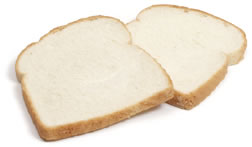
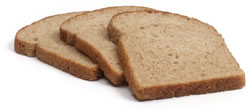
white bread whole wheat bread

Most breads, whether whole-wheat or white, are usually comparable as far as total calories, fat and iron go. Most white breads these days are also well-fortified with the required daily values of vitamins and minerals. As the article goes on to describe, the biggest difference shows up in the amount of fiber in each type of bread.

In general, 100% whole wheat/whole grain breads have more fiber than white bread or other breads made with wheat flour, although some white breads, such as Iron Kids and Iron Kids crust-less bread, have almost as much fiber as many kinds of wheat bread.

For kids, fiber is a vital component of any meal because it not helps you feel full but also helps in passage of foods through the digestive system. For kids with constipation, whole-wheat breads can be extremely helpful.

Another important mineral for kids is calcium - vital for bone growth and strength. Milk-based white breads might sometime have more of this, but fortified whole wheat breads nowadays have an equal quantity as well. If milk or dairy products are not a big hit with your kids, bread can be that extra source of calcium.

So what should you look for next time you are in the bread-aisle? Here are a couple of pointers:

  1. Protein: 2-3 g per serving (sometimes a serving might be just one slice - given the bigger size of bread these days)
  2. Calcium: About 10-15% of Recommended Daily Allowance
  3. Fiber: About 2-3 g per serving (this might just be the pivotal decision-maker when you are comparing different types or brands of bread).

As always remember to not only look for 100% Whole Wheat on the label . but also check the ingredients for terms like “100% Whole Wheat” or “100% Stoneground Whole Wheat”. If you see terms like “enriched wheat flour”, you might want to skip that brand if you are truly looking for the whole wheat variety.

Personally, I used to be a big fan of Arnold Double Fiber Bread but like I mentioned later in the comments I have now switched to the Ultimate-Grains Hearty Nutri-Bran bread from HS Bakery (unfortunately, their website is hopeless as far getting any useful information about its products goes). One slice has 100 calories, 2g of fat and best of all 5g of fiber and 5g of protein. The primary ingredients are water and coarse whole wheat flour and it is mildly sweetened (4g of sugar) with sugar and raisin paste (no artificial flavors or corn syrup).

If the kids in your home like whole-wheat bread, then there really should be no looking back at white. I have also heard of parents who use a neat trick to convince their kids that whole-wheat bread is better for them. At the supermarket they show their kids both packets and ask them to lift them. Typically the white bread loaf will be much lighter for the same volume and they can tell the kids “See? White bread is just filled with air! A big kid like you needs something more solid - like this wonderful brown color bread!”.

What bread will you choose for your family?

Technorati Tags: health, nutrition, whole grains, whole wheat bread

Related Posts:


FitnessMantra Weekend: Arteries Are Adversely Affected By Fructose-Sweetened Drinks

24

June

Fitness Mantra del.icio.us pageWelcome to “FitnessMantra Weekend”, your once-a-week health news update. As always you can also stay updated with the latest in fitness news by subscribing separately to the Fitness Mantra del.icio.us feed.


If you live in the U.S. you are already aware of the profusion of products sweetened with that corn-based alternative to good old sugar: High Fructose Corn Syrup. Earlier, in High-Fructose Corn Syrup: Giving you that empty feeling I gave a few reasons why it’s better to avoid products that have HFCS (especially if the total sugar per serving exceeds about 6-7g). Today, additional information about such sweetened products only serves to strengthen my stand on artificial sweeteners of all kinds.

The Washington Post article titled Fructose-Sweetened Drinks Tougher on Arteries describes experiments which showed that the arteries of people consuming fructose sweetened products were adversely affected with fatty deposits as opposed to those of people who only drank glucose-sweetened drinks.

The researchers found that 9 weeks later, 24-hour post-meal triglyceride (blood fat) levels went up after 2 weeks of fructose-sweetened drink but went down in those who consumed glucose-sweetened drinks.

Those who drank fructose-sweetened drinks also had a boost in fasting blood concentrations of LDL (”bad”) cholesterol and other measures. Those levels were unaltered in those consuming glucose-sweetened drinks, however.

These results were especially pronounced when the participants already had a weight problem. Given such increasing evidence the best recourse would be to avoid unnatural and artificial sweeteners and use the original sugar but sparingly. Even when you have to sweeten your daily cup of coffee, it’s better to go with just plain sugar or brown sugar, as I wrote in “Sweeteners and sugar substitutes - why I just use sugar“.

Now onto this week’s top health and fitness stories:

  1. Pack nutrition into your picnic basket: Put a new twist on potato or pasta salad by substituting chopped vegetables for some of the higher-calorie potatoes or pasta.
  2. Dine out, don’t pig out - readers give strategies: “My husband and I share! How easy is that?” writes Carine of Laguna Hills, Calif. “half the calories, and it’s cheaper, too,” she points out.
  3. Omega-3s may hike baby’s IQ: Children whose mothers get enough omega-3 fatty acid during pregnancy may have sharper problem-solving skills in infancy, a small study suggests.
  4. Dietary supplements face stricter regulations: For the first time, makers of dietary supplements, including vitamins and herbal pills, will be required to test their products, the Food and Drug Administration said Friday.
  5. Fructose-Sweetened Drinks Tougher on Arteries: Fructose-sweetened drinks are more likely to provoke the development of fatty artery deposits in overweight adults than glucose-sweetened beverages, researchers say.
  6. Omega-3 fatty acids may help slow prostate cancer: A new study in U.S. with mice suggests that a diet high in omega-3 fatty acids found in fish oil and certain types of fish might help slow prostate cancer, media reported Friday.
  7. Ambulance for the obese a Calgary first: Calgary paramedics are now driving the first ambulance in Canada specifically designed for obese patients. The ambulance can accommodate people weighing up to 1,000 pounds, so obese patients don’t have to be reluctant about calling for medical help.
  8. Calorie info for NYC fast food joints stays veiled: Fast food restaurants in New York are getting a temporary reprieve from a first-in-the-nation rule requiring them to put calorie information on their menus.
  9. Feds, legal threats put snacks on a diet: America’s snack food makers are marketing smaller portion packs, using healthier fats and reducing sugar in some of the nation’s favorite potato chips and cookies.
  10. Cinnamon may keep blood sugar down: Adding some cinnamon to your dessert may temper the blood sugar surge that follows a sweet treat, a new study suggests.
  11. Canada threatens trans fat limits if no cuts made: The Canadian government called on the food industry on Wednesday to tightly limit artery-clogging trans fats, and threatened mandatory cuts if enough is not done in the next two years.
  12. Study finds staggering cost of treating diabetics: One out of every eight U.S. federal health care dollars is spent treating people with diabetes, a study found
  13. More seniors-only fitness centers popping up: The gym, Nifty After Fifty, is one of many fitness centers popping up around the country aimed at serving older clients.
  14. No progress seen in U.S. women diabetics’ death rate: The death rate for U.S. men with diabetes has fallen sharply since the early 1970s even as more people develop the disease, but women are not making the same progress, researchers said on Monday.
  15. Pre-Diabetic Changes Double Heart Disease Risk: Even the very earliest signs of diabetes can increase the risk of dying from heart disease, a new Australian study says.
  16. Japan’s New Public Health Problem Is Getting Big: Outside Japan, the country is known for a high reliance on low-fat fish and seaweed dishes. But meat and high-fat foods feature ever more prominently on Japanese tables.
  17. Vitamin D primer: there’s no one recommendation for all: It has long been known vitamin D helps our bodies form and maintain strong, healthy bones and prevents fractures in the elderly but it may also help cut the risk of cancer.
  18. Low-carb diet ‘cancer risk’ claim: Low-carbohydrate diets may increase the risk of people suffering bowel cancer, scientists have claimed.

Get the best health and fitness stories of the week in your RSS inbox.

Have a great weekend!

Fitness Mantra del.icio.us page

Technorati Tags: health, fitness, health news, fitness news, health links, fitness links, del.icio.us

Related Posts:


Next Page »

Currently Reading:
"Good Calories, Bad Calories"
by Gary Taubes
Good Calories, Bad Calories

Subscribe to Fitness Mantra       Proud Member of the 9Rules Network


Recent Comments
  • Jill G.: Thanks for the tip! these are simple but VERY effective health and fitness tricks! Little things like...
  • Michelle: When I first eat these fiber one bars, I too had huge gas problem! But after a couple of days, when my...
  • Fitness Guy: I am not sure of the science of this study either but it seems like a plausible bit of info. I am sure...
  • fitnessmantra: Hi Lila, I am not sure where you would find this bread in NY/NJ. Like I mentioned above, I find it in...
  • Lila: Can you tell me where to find Ultimate Grains breads in the New York/New Jersey area? Thanks for your help.


del.ico.us

Links To FitnessMantra (Technorati)