“Face The Fats”, Advises The American Heart Association
05
May
Probably no macro-nutrient is as misunderstood or mischaracterized as fat is. While it is generally known that excessive fat in our diets tends to lead to clogged arteries and a variety of heart-related issues, it is also clear that the body cannot survive without fat. As I pointed out in Fat Fiction, our brains are almost 60% fat and fat is vital for the functioning of many of our internal organs including the heart and lungs.
 But with so many varieties of fats like saturated, unsaturated, trans fats etc. it’s no wonder that misconceptions are rife and finding the right information even more difficult. Well, the American Heart Association has come to the rescue with a feature titled “Face The Fats“.
According to introduction on the site it will give you enough information to help you know things like which fats are good and which to avoid, which foods contain which types of fats and even how much fat you should consume each day.
It all begins with the Fats 101 primer that answers basic questions like “Does My Body Need Fat?” (you already know it does!) and whether fats can be part of a healthy diet. In the same section you can find detailed information about the various types of fats like Saturated and Trans Fats. These are very informative and will satisfy the quest of most readers to know what these fats really are and how each type affects their health.
You can wrap up your “Fat Finding” tour with a nifty tool called “My Fats Translator” (has it’s own website!). Just plug in your age, gender, height, weight and physical activity and the tool churns out not only the total number of calories you need to maintain your weight but it goes one step further: it actually ells you how many of those calories should come from fats and within that it gives you limits for saturated and trans fats. I have touched upon this topic in one of my earlier quick tips: “Know where you are getting your daily requirement of fat from“.
Now, I agree this kind of detailed counting is going to be almost impossible to keep track of on a daily basis but given that most of us eat in a consistent pattern everyday, just maintaining a food diary for a week will give us a quick estimate of whether we are atleat close to our daily limits or not. Pretty soon one should be able to eyeball foods and know how it will affect our diet plan for the day.
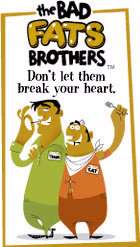 Finally what health website worth its salt is complete without a few mascots or comic characters? The AMA surely doesn’t want to disappoint you here: Behold the “Bad Fat Brothers“, a flash-based website about two very creatively named characters called Sat and Trans (ouch).
Supposed to represent the two types of fats that are bad for you, these two characters come replete with bad James-Bondish jokes like “We’re real heart-breakers”. Once on the site, entering the diner will start a little webisode where the two brothers will entice you with all sorts of foods laden with bad fats.
Go ahead and explore the site. If you can numb yourself to the poor jokes you will actually learn something useful and have fun while at it - perfect for a younger audience to whom parents wish to impart the knowledge of healthy eating.
Here’s to healthier eating with a better understanding of fats and the knowledge of how the right quantity of the right variety of fat can be a huge asset to our diets.
Technorati Tags: health, nutrition, fats, saturated fats, trans fats, american heart association
Related Posts:



1. Maggie Mac | May 6th, 2007 at 7:30 am
Another great source of information — and a terrific resource for teaching children about nutrition and health — are Dr. William Sears’ books “LEAN Kids” and “Eat Healthy, Feel Great.”