FitnessMantra Weekend: High-Glycemic Diets Might Lead To Fatty Liver
23
September
 Welcome to “FitnessMantra Weekend”, your once-a-week health news update. As always you can also stay updated with the latest in fitness news by subscribing separately to the Fitness Mantra del.icio.us feed.
In the Glycemia series of posts, I described the effect that different foods have on our blood sugar levels. While our goal should be to maintain a steady level of blood sugar (since our bodies perform optimally under this condition), not all foods like to comply with our wishes. High-glycemic-index (GI) foods like white rice, pasta, or bread create a surge of glucose that our bodies must respond to with insulin. The failure to adequately match insulin requirement with proportionate production is the deadly disease, diabetes. (Do read the series again to brush up your knowledge of the key terms involved in the discussion).
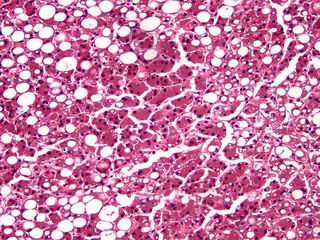 No, all that was not just to promote a previous post: BBC News reports that a Starchy diet ‘may damage liver’. Regular consumption of high-glycemic and refined foods not only causes the body to develop insulin resistance and develop a risk for diabetes, it is now also being shown to cause “fatty-liver”, a condition by which fat accumulates in the liver, leading to potential liver-failure in the future. The image on the right shows a close-up of fatty cells in an affected liver (courtesy Brown University).
In an interesting study conducted at the Boston Children’s Hospital, two groups of mice were given food with exactly the same calorie content but one group got food composed of high GI ingredients while the other was fed low GI foods.
After six months on the diet, the mice weighed the same, but those on the high GI diet had twice the normal amount of fat in their bodies, blood and livers.
…
Dr David Ludwig, who led the research, said that the results would also apply to humans, and even children, in whom fatty liver is becoming far more common.- Via BBC News
Including more whole grains and reducing the amount of refined carbohydrates in our diets is a key step to maintaining a steady glucose level in our blood while also keeping full for longer periods of time as the energy in the food is released slowly to the cells in our bodies.
Here’s more health news from the week that was:
- Diabetes may hike death risk from pneumonia: People with type 2 diabetes or elevated blood sugar are at increased risk of dying after being hospitalized for pneumonia, a new study hints.
- Make your friends fit your diet - not blow it: As it turns out, not only does your diet influence which friends you pick, your friends influence your diet.
- Seniors balk at ban on free doughnuts: It was just another morning at the senior center: Women were sewing, men were playing pool - and seven demonstrators, average age 76, were picketing outside, demanding doughnuts.
- Rich or Poor, Fat People Have Higher Diabetes Risk: Fat people who are rich are just as likely to develop a precursor to diabetes as those who are poor, suggesting that money for a healthier diet and better treatment matters less than being active
- Soccer beats jogging for fitness: A friendly game of soccer works off more fat and builds up more muscle than jogging, new research shows.
- Obesity Won’t Affect Seniors’ Memory: While past studies have found obesity in middle age increases a person’s risk for dementia or Alzheimer’s disease, our finding shows obesity in old age has no effect on a person’s memory.
- Starchy diet ‘may damage liver’: A diet rich in potatoes, white bread and white rice may be contributing to a “silent epidemic” of a dangerous liver condition.
- Smart Fitness: Getting high on exercise: The euphoria that some people report from exercise is often referred to as a “runner’s high,”
- FDA helps kids learn to read food labels: “Since I find parents are not doing a bang-up job (teaching nutrition), I think it’s important to empower the children with their own information”
- Any kind of exercise helps diabetics: Weight training works just as well as running on a treadmill or biking to help the most important symptom of type-2 diabetes - long-term control of blood sugar
- Report: Fewer soft drinks in school: School vending machines are stocked with fewer high-calorie soft drinks today because some states have banned the sale of sodas on campus and the beverage industry is phasing in healthier drinks
Get the best health and fitness stories of the week in your RSS inbox.
Have a great weekend!
Technorati Tags: health, fitness, health news, fitness news, health links, fitness links, del.icio.us, high-glycemic diets, fatty liver, diabetes
Related Posts:
 “Snacking itself is neither good nor bad. The effects of snacking depend upon what snack you choose and whether the snacks meet your nutritional needs.” These words in the very first paragraph of “Snack Smart To Stay Energized” really ring true.