FitnessMantra Weekend: Rethinking Thin - Is Obesity A Purely Inherited Condition?
13
May
 Welcome to “FitnessMantra Weekend”, your once-a-week health news update. As always you can also stay updated with the latest in fitness news by subscribing separately to the Fitness Mantra del.icio.us feed.
On average I bookmark about 25 interesting health and fitness related articles each week and in most cases I skim through the article and can grasp the gist of it. 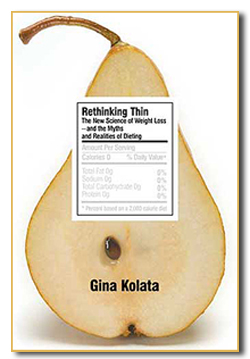 This week’s highlighted article, however, was an exception. I actually read through it twice to understand the implications and while many of the theories expounded seemed to make sense and I had read similar articles in the past that hinted at this conclusion, it was still a tough pill to swallow and see more conclusive evidence: being obese or overweight could be a purely inherited condition.
Genes Take Charge, and Diets Fall by the Wayside is the attention-grabbing New York Times article I speak of. It describes the experiments conducted by Dr. Jules Hirsch of Rockefeller University who had set out in 1959 to find out more about the effects of weight loss on obese. I urge you to read the 2-page article completely so you can understand how Dr. Hirsch came to this startling conclusion: As the obese lost weight, their metabolism also started to slow and their mental outlook became similar to that of normal people who were suddenly starved.:
The Rockefeller researchers explained their observations in one of their papers: “It is entirely possible that weight reduction, instead of resulting in a normal state for obese patients, results in an abnormal state resembling that of starved non-obese individuals.”
But if you thought that the result was as simple as that and once people got fat they could almost ever lose that weight again, then you are in for more food for thought: the reverse was true too! Thin people who gained weight by unnaturally compulsive eating spiked their metabolism (by almost 50%) to the point where it became really difficult to keep the weight on! After the study this second group of (naturally thin) people had no difficulty shedding the weight they gained during the study.
Then in the 1980s, Dr. Albert Stunkard of the University of Pennsylvania performed a study that showed that adopted children assumed a particular body-type and weight at adulthood that had more to do with who their biological parents were than with their eventual adoptive environment or even what they ate during their childhood growing up! The startling result is succinctly summed up as: 80 percent of the offspring of two obese parents become obese, as compared with no more than 14 percent of the offspring of two parents of normal weight.
Think it’s easy for that fat person to lose weight? Just eat less and exercise more, you say? Dr. Jeffrey Friedman, an obesity researcher at the Rockefeller University has this to say about the matter:
“The feeling of hunger is intense and, if not as potent as the drive to breathe, is probably no less powerful than the drive to drink when one is thirsty. This is the feeling the obese must resist after they have lost a significant amount of weight.”
Gina Kolata is the author of Rethinking Thin: The New Science of Weight Loss-and the Myths and Realities of Dieting, an eye-opening book that describes the futility of overthinking weight-loss and why, after a certain point, pure genetics could take over what you will finally weigh. The studies above and more are included in her book which talks about issues at the very core of the multi-billion-dollar weight-loss industry in the United States and the rest of the world.
Fat Chance is an article that reviews the book and offers highlights from it. You can read the first chapter of Rethinking Thin on the New York Times website or buy the book from Amazon.
So what does this mean for the millions of people trying to lose weight? Just sit back on the couch, tear open that chips-packet and blame your parents? Not a chance - that will only make a bad situation worse. The rules of calorie balance apply to everyone and they can lose weight using that very same regimen of eating less than they expend and including a well-balanced exercise program.
Granted, this entire blog post tells us it’s going to be more difficult for them to keep the weight off, but then isn’t that what mental-discipline is all about?
On to the week’s top health and fitness stories:
- One town proves fighting obesity takes a village: Five years ago, Tufts University enlisted the entire city of Somerville, Mass. to attack childhood obesity, not just in schools, but on every front.
- Self-esteem tied to body image for most teens: The happier most adolescents are with their bodies, the more they like themselves, a new study shows.
- Chocolate conundrum: Is it good to indulge?: How do we reconcile boosting chocolate’s antioxidants, which supposedly help lower risk of heart disease and cancer, with possible weight gain, which may increase the risk of these diseases?
- Milk campaign under fire ending: An ad campaign that suggested milk can help people lose weight is ending, the Federal Trade Commission told a doctors’ group that had complained.
- Feeling down? Refuel with tofu and turkey: Are your meals giving you the most bang for your bite?
- Preschool girls more fat than boys: As every Western nation struggles with child obesity, the Swedes are puzzled by an unusual blip in the data: Why are little girls more likely to be fat than little boys?
- Germany launches obesity campaign: The German government is launching an action plan to cut obesity rates sharply by 2020.
- 100% Juice May Not Boost Kids’ Weight: Drinking 100 percent juice may not make children more likely to be overweight, a new study shows.
- Pediatricians Not Tracking Kids’ BMI: Despite recommendations that came out years ago, two new studies suggest that many pediatricians are failing to properly track the body weight of their young patients.
- Cut Your Diet’s ‘Energy Density’ and Lose Weight: Want to lose weight? Focus on reducing the “energy density” of your diet, a new study suggests.
- Genes Take Charge, and Diets Fall by the Wayside: “The feeling of hunger is intense and, if not as potent as the drive to breathe, is probably no less powerful than the drive to drink when one is thirsty. This is the feeling the obese must resist after they have lost a significant amount of weight.”
- New diet winners: We rate the diet books and plans. Plus: 8 strategies that work: The basic formula for losing weight has not changed: Consume fewer calories than you burn-about 500 fewer every day, to lose about a pound a week.
- The Skinny on Getting Thin: Gina Kolata on ‘Rethinking Thin’: In a new book, journalist Gina Kolata looks at America’s obsession with dieting and the science behind our frequent weight-loss failures.
- Study: Dieters slather on the optimism: When it comes to losing weight, people have high hopes: 41% are trying now to trim down, and they’d like to lose 37 pounds, a poll reported Monday.
- Best and worst diet strategies: You’ve done the cabbage-soup diet, the grapefruit regimen, even the ice-cream plan. Still those stubborn excess pounds taunt away every time you pass a mirror.
- Fathers responsible for fat children: Australia study: Fathers who play less of a role in child rearing are more likely to have overweight or obese offspring, Australian researchers said.
- Coffee can be good for you, experts say: Drinking coffee can help ward off type 2 diabetes and may even help prevent certain cancers, according to panelists discussing the benefits — and risks — of the beverage at a scientific meeting.
- Diabetes prevalence more than doubles in King County: The prevalence of diabetes has about doubled in the state’s most populous county over the last decade, and public health officials believe eating habits are the main culprit.
- Cavities increasing in baby teeth: Tooth decay in young children’s baby teeth is on the rise, a worrying trend that signals the preschool crowd is eating too much sugar.
- Kids’ comics spread awareness about diabetes: The evil Dr. Diabetes leaps from a hospital window, crashing through the glass, determined to infect anyone in his path with the chronic, debilitating disease from which he takes his name.
Get the best health and fitness stories of the week in your RSS inbox.
Have a great weekend!
Technorati Tags: health, fitness, health news, fitness news, health links, fitness links, del.icio.us
Related Posts:

 Yes, that box of snacks claims to be the best thing for you to munch on since sliced bread and comes decked with promises “Only 3g Net Carbs! Zero grams trans fats!”. But you know better: Use the faculty of sight to quickly flip the box and glance at the Nutrition Label. The 10 seconds you spend seeing this can save you hours of agonizing over whether the food is actually good for you. What do you look for? Good quantities of fiber and protein. Lower numbers for fat and sugar. And if it has some vitamins and minerals to boot then more power to ya! Remember it’s all about
  So what is the sound you should most be concerned with when you think it’s time to get some nutrition? Surely the grinding of the snack cart or the tinkle of the ice-cream truck should play second fiddle to that most important sound of all: your stomach grumbling! Understanding if you are truly hungry (and sometimes listening or looking for signs of it) is a sure-fire way to keep your weight in check and also recognize false-triggers that make us want to eat: it could be stress, boredom or for all you know,
  Beware the perils of letting your nose be the decider of what your mouth should be eating! Roasted meat on a grill, melting butter in a pot, it’s no wonder that scientists have recognized pheromones and other powerful smells can make human beings behave in a variety of unplanned ways. Parties, group outings for lunch/dinner or buffets are easy places for losing control and succumbing to the call of the olfactory senses; but careful advance planning can thwart even the most sudden attacks on our diet defenses. Plan to drink at least 2 full glasses of water during the eating session, plan to
  Ah!, you might think - surely the easiest of the lot because it deals directly with the root cause of all the problem: our tongue and the tastes it craves! Well, think again, because sometimes the reason we crave certain foods could be less our fault than we might think (see
 What is the sixth sense? Some people call it