As a java programmer who has to constantly think up solutions to unique programming challenges, I find that it helps when the quantity of java I put into my body is equal to the amount I churn out. Of course, I mean java as in that caffeine-filled ambrosia that is the life-blood of the software industry (although I was kidding about the quantity - I try to restrict myself to just 1-2 cups a day).
At work we use the awesome Keurig Brewing System with almost 20 different varieties of coffee like House Blend, Hazelnut Cream and my own favorite Dark Magic. But choosing the coffee is an easier task than what follows: choosing what one should sweeten the drink with! The choices are colorful (pink, blue and yellow compete with white and brown) and equally confusing. I thought I should try to see what these things contain and if it’s worth all the trouble.
Let’s take a look at some of the major players:
1. Sweet ‘N Low:
 This is the oldest of the sugar substitutes. Invented in 1959, Sweet ‘N Low is a mixture of dextrose and either saccharine (U.S.) or cyclamate (Canada). The reason for the difference in composition between the two countries? Both saccharin and cyclamate have been linked to bladder cancer after an experiment with lab animals and so each country decided to ban one of the substances - how convenient! (Cyclamate is banned in the U.S. and saccharin is approved only for diabetic use in Canada - weird, huh?).
In 1977 Canada proved conclusively that it was indeed saccharine that was responsible for the bladder cancer in rats and so advised the FDA to ban it. In the U.S. however, the Food Lobby fought any similar restrictions and all bans were placed on hold until further studies could be conducted. In 1991, the ban was completely lifted and today saccharin is used in thousands of products and is essentially considered “safe”.
Saccharin is 300-500 times as sweet as sugar and so dextrose (a corn derivative) is added to literally dilute the sweetness and make it easier to measure out.
2. Equal
 Equal uses the sweetening ingredient aspartame along with dextrose. What is aspartame? Almost 180-200 times sweeter than sugar, aspartame is composed of two amino acids aspartic acid and phenylalanine, as well as a small amount of methanol. Now, the Equal website will tell you that amino acids are the building blocks of protein, but don’t raise your hopes: aspartame is nothing like a protein and does not have the same structure.
Aspartame is, of course, as controversial as saccharin and for every website that claims to expose its harmful effects, you will find another that praises it for the wonder-find it is. Lab tests have shown a correlation between aspartame and brain tumors in rats and you should also know that as late as 1980 the FDA was against approving it until further research was done. Then …
In 1981, U.S. President Ronald Reagan appointed as FDA commissioner Arthur Hull Hayes. Citing data from a single Japanese study that had not been available to the members of the PBOI, Hayes approved aspartame for use in dry goods. In 1983 FDA further approved aspartame for use in carbonated beverages, and for use in other beverages, baked goods, and confections in 1993. In 1996, the FDA removed all restrictions from aspartame allowing it to be used in all foods.
- Wikipedia
It’s interesting that Arthur Hull Hayes was a close friend of Reagan and many believe this was a conflict of interest. Another interesting coincidence? Donald Rumsfeld (yes, that Rumsfeld), was CEO, President, and then Chairman of G.D. Searle & Company (which discovered aspartame).
In 1977, when Rumsfeld was CEO of the Searle corporation, the Food and Drug Administration (FDA) was reportedly reluctant to legalize aspartame (NutraSweet) because of adverse effects on animals in testing. On January 25, 1981, (shortly after President Reagan took office), the previous FDA commissioner’s authority was suspended, and the next month, the commissioner’s job went to Dr. Arthur Hull Hayes, a medical doctor and pharmacist. In July, Hayes approved aspartame for dry foods.
-Wikipedia
One fact about aspartame: it breaks down into its constituents including phenylalanine, and the few people who are born with phenylketonuria (inability to process phenylalanine), should be very careful (if you have consumed diet sodas for a while now and are healthy enough to be reading this, then you should be ok - since most diet drinks are sweetened with aspartame!)
Please read the Conspiracy Theory section later in this article.
3. Splenda
 A relatively new entrant in the sweetener business, Splenda consists of the sweetening agent sucralose along with maltodextrin and (what else?) dextrose.
Sucralose is almost 600 times sweeter than sugar and is created by selective chlorination of sucrose. Of the three big sweeteners in the market, Splenda is generally considered the “safest” of the 3 sweeteners although certain lab tests showed mild carcinogenic effects and reduction in the weight of the thymus (immune-system related) gland. These results were often obtained with higher doses and the recommended intake of 5mg / kg of body weight per day is generally considered safe and today Splenda is widely used in almost 60 countries including the United States, the European Union, China and India.
4. Cane Sugar or Table Sugar
 Table sugar is nothing but plain sucrose with no artificial sweeteners. Sucrose is a disaccharide (two molecules bonded together in a chemical bond) of glucose and fructose. A typical sugar packet weighs about 4-5 g (about 20 calories - all carbohydrate).
When I wrote about high fructose corn syrup I mentioned how the separate molecules of glucose and fructose in HFCS could be one of the reasons why the bad effects of fructose are more pronounced in the sugary syrups (and more so because HFCS is found in so many products it has no business being in). Sugar’s disaccharide molecules are natural and have been used safely for many, many more years than any sweetener. See “Why Sugar” below.
5. Sugar In The Raw

Sugar in The Raw is not too much different from sugar, except that it is not refined. Regular sugar is made by crushing sugarcane into juice and then refining it until the sugarcane flavor is removed and pure sucrose is left. On the other hand, Sugar In The Raw (or turbinado sugar), preserves the flavor by crystallizing the sugarcane juice and rinsing it to make it free flowing. This preserves some of the nutrients found naturally in sugarcane.
Also, many people have a concern with the animal bone char used during the filtration of refined sugar, but this is not used in Sugar In The Raw. (Full Disclosure: If it was not already apparent, I use this product myself)
Conspiracy Theories
To begin with, Fitness Mantra is not in the business of conspiracy theories (nor should any health or fitness site be). The goal of this site has always been to point you to the right resources so you can make your own decision. Ultimately, given all the facts, it is you who will make the decision about the products you are most comfortable in using.
We can probably never get away from sodas and other items that use some or all of the sweeteners mentioned here. Nor are we going to hear any less from conspiracy theorists threatening dire consequences for consumers of saccharin or aspartame (heck, it doesn’t take much searching to find sites that claim even milk is bad for you!).
My personal take is that certain things can take quite a few years to create an effect. Sweeteners have been around for about 20-40 years - a heartbeat compared to the centuries man has been drinking milk - and thriving, if I may add. The facts are out there - do your research; make your own decisions.
Why sugar?
Finally, just a brief note on why I use (raw) sugar. As a disclaimer, this is not advice for those suffering from diabetes or any symptoms or health conditions that prevent them from consuming sugar. But if you are obese or overweight without any other problems, then it’s time to consider what, if anything, you are achieving by using sweeteners.
- Sweeteners are too sweet: First, you must realize that artificial sweeteners are way sweeter than sugar. I was a regular Splenda user for a couple of months until one day I found that the break room had run out of it and it would take a couple of days for fresh supplies. No problem, I thought: I’ll just use sugar in the meantime. One packet. Two packets. Three packets! Darn it, had they started making sugar less sweet these days?! It took 5 sugar packets to sweeten my coffee to the level Splenda had gotten me used to! (thanks to unit bias I was using 2 Splenda packets for each drink). This made me realize just what kind of sweetness I had started to expect from everyday foods. I started to use raw sugar the very next day. Starting from 3 packets a drink, I am finally down to one.
- Is it worth it? Let’s say you have 2 drinks a day that need sweetening (tea, coffee etc.) At two packets of sugar for each drink, we are talking 80 calories. Now, you already know that even if you are on a calorie-controlled diet, excess starvation can have an adverse effect. This means you probably need about 1500-1800 calories anyway. But 80 calories is just 4-5% of that! Maybe what we should be really concerned about is the drink that needs sweetening in the first place. Starbucks’ 20-ounce Java Chip Frappuccino with whipped cream, for example, rivals a Big Mac with its 650 calories and 25 grams of fat. Even the so-called “Frappuccino Light”, made with lower-fat milk and artificial sweeteners, ranges from 150 to 180 calories and 10 to 15 grams of fat per 16-ounce serving, depending on the flavor!(-Via Seattle PI). My opinion is that rather than worrying about the 20 non-fat calories from a sugar packet, we should be concerned with the type of drinks we are having and what dairy we use in it. Try switching from half-and-half/whole milk to fat-free/1% milk and watch how fast the sugar-packet calories become a meaningless thing to worry about!
- Natural and proven safe: As I mentioned earlier, the real effects of certain artificial products can take awhile to present themselves. Sugar has been safely used for generations and, more importantly, it is a natural product. If anything, this alone is reason enough to use it (of course providing your health allows it).
The bottom line is we should be trying more to reduce our dependence on sugar rather than switching to the use of highly sweet, artificial products (with questionable safety) that, in fact, further increase our sweet-cravings. It’s ironic that the health problems like type-2 diabetes, that prevent people from eating regular sugar, were probably created by the obesity brought on by an over-indulgence in sweets and sugary foods in the first place! If only they had consumed moderate quantities of sugar and fat, they could have continued to do so!
Live well (and forget the sweeteners - just use moderate amounts of regular sugar if you can, won’t you?!)
Technorati Tags: nutrition, sugar substitute, sweetener, splenda, equal, sweetnlow, sugar in the raw, cane sugar, sugar
Related Posts:
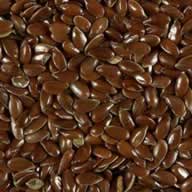 When you first take a look at the unassuming flaxseed it would not be surprising if you underestimated its potential value.