RSS Subscribe Subscriber count

Archived Posts from 'Nutrition'

100 Smartest Diet Tips Ever

10

January

At Fitness Mantra the focus has always been on making small everyday changes that can lead to big results. But sometimes the cornucopia of facts and figures, fruits and veggies, whole grains and lean meats can be a bit overpowering. Overthinking all the facts you know and trying to fit them all in your schedule could lead to an even worse situation: paralysis by analysis, or the inability to do anything because you know so many things!

apple and measuring tapeSo at times, it is not surprising if you just looked at all the facts and said “I Can Only Handle One Diet Change Right Now. What Should I Do?”. It is this precise question that was put to some of the top dietitians from the American Dietetic Association by Prevention Magazine and the results were compiled into the 100 Smartest Diet Tips Ever.

While some of the tips touch upon things we have discussed extensively at Fitness Mantra like the inclusion of whole grains and watching portions, there are many which at first glance seem like common sense, but which we might unconsciously ignore:

  • Eat the low-cal items on your plate first, then graduate. Start with salads, veggies, and broth soups, and eat meats and starches last. By the time you get to them, you’ll be full enough to be content with smaller portions of the high-calorie choices.
  • Get calories from foods you chew, not beverages. Have fresh fruit instead of fruit juice.
  • Use prebagged baby spinach everywhere: as “lettuce” in sandwiches, heated in soups, wilted in hot pasta, and added to salads.

Read all the tips and remember - even if you incorporate just two of these changes a week, you should be all set by the end of this year!

Technorati Tags: health, fitness, nutrition, diet tips

Related Posts:


QT#12: Know where you are getting your daily requirement of fat from

14

December

Today morning I had a peanut butter on whole-wheat bread sandwich for breakfast (on weekdays it’s either that or oatmeal with flax seed - I can be quite boring sometimes). As is my wont I just happened glanced at the nutrition label of the peanut-butter jar for no apparent reason when suddenly “16 of fat” jumped out at me. Two teaspoons had 16g of fat and that was 25% of my daily requirement! For a second I panicked.

pen and numbersAnd then it hit me. With a recommended intake of 65 g of fat (infact a little more since I am trying to gain weight) I still needed to get about 50+ more grams during the rest of the day. I better have a good plan for that.
Know where you are getting your daily requirement of fat from.

This is not to be taken lightly, since as you might already know, fat is crucial for the essential functioning of your body and several myths regarding fat are just that: myths. The key is knowing not only where you are getting your recommended daily allowance of fat from but more importantly, what kind of fat it is. Fats from sources like almonds, walnuts, peanut-butter and olive oil are of the mono-unsaturated variety which are much healthier for your body than fat from sources like dairy products (butter, milk, cheese), pastries (cakes, cookies, chocolates) or vegetable oils.

In my case, let’s see, that’s

  • breakfast: 16g from the peanut butter and 3g from two slices of my favorite bread
  • snack: about 3g from cottage cheese
  • snack: virtually nothing from the loads of milk I drink since it’s all skim
  • lunch: about 7g from whole-grain flat bread and about 8g from the vegetable side-dish (from about 1/2 tbsp of olive oil per serving)
  • snack: virtually nothing from a medium apple
  • snack: about 5g from 1 medium egg
  • dinner: similar to lunch but could be made up of rice or cous-cous with vegetables - say about 15g

Add that all up and you get a grand total of 57g. A tempting piece of candy here, a succumbing to a half-a-cookie there and I’ll probably be pushed into range.

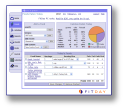
fitday Food diaries like FitDay (I think this is the best out there and the online version is free - will review this soon with tips on how to use it), MyFoodDiary or the online pantry from NutritionData are excellent ways to keep track of your daily consumption trends and help you stay within your requirements. They all offer easy ways to save your favorite foods and even enter nutrition data for foods that are not in their databases.

Updated: Finally it’s important to remember that while this post talks only about your intake of fat, any calories you consume in excess of your daily requirement (on average, about 2000) will be stored as fat too. It’s as equally imperative to keep track of total calorie consumption as it is of individual food-groups like carbs, proteins or fats.

What techniques do you use to track your food consumption? Do you know where you are getting your fat from?

Technorati Tags: health, nutrition, calories, food journal, food diary, fat

Related Posts:


« Previous PageNext Page »

Currently Reading:
"Good Calories, Bad Calories"
by Gary Taubes
Good Calories, Bad Calories

Subscribe to Fitness Mantra       Proud Member of the 9Rules Network


Recent Comments
  • toots: I bought a couple boxes because of the fiber content and WOW I hardly ever have gas, and I could not stop!!!...
  • Justin Hartnell: I am doing a research report on HFCS for one of my classes. I have found so many industry supported...
  • Amy F: I started breaking into hives shortly after including Fiber One bars into my diet. I went for extensive...
  • Lara Lalaa: OMG, what a blessing finding this site, Yesterday I purchased a whole box at Sam's and yes, the flavor is...
  • fitzroy Taylor: It is rather unfortunate to see responsible people in your country fooling around with people's...


del.ico.us

Links To FitnessMantra (Technorati)